News

News

News and thoughts from True Relevance. The posts appear in their original language.

  • Image for the post of 26 Oct 2026

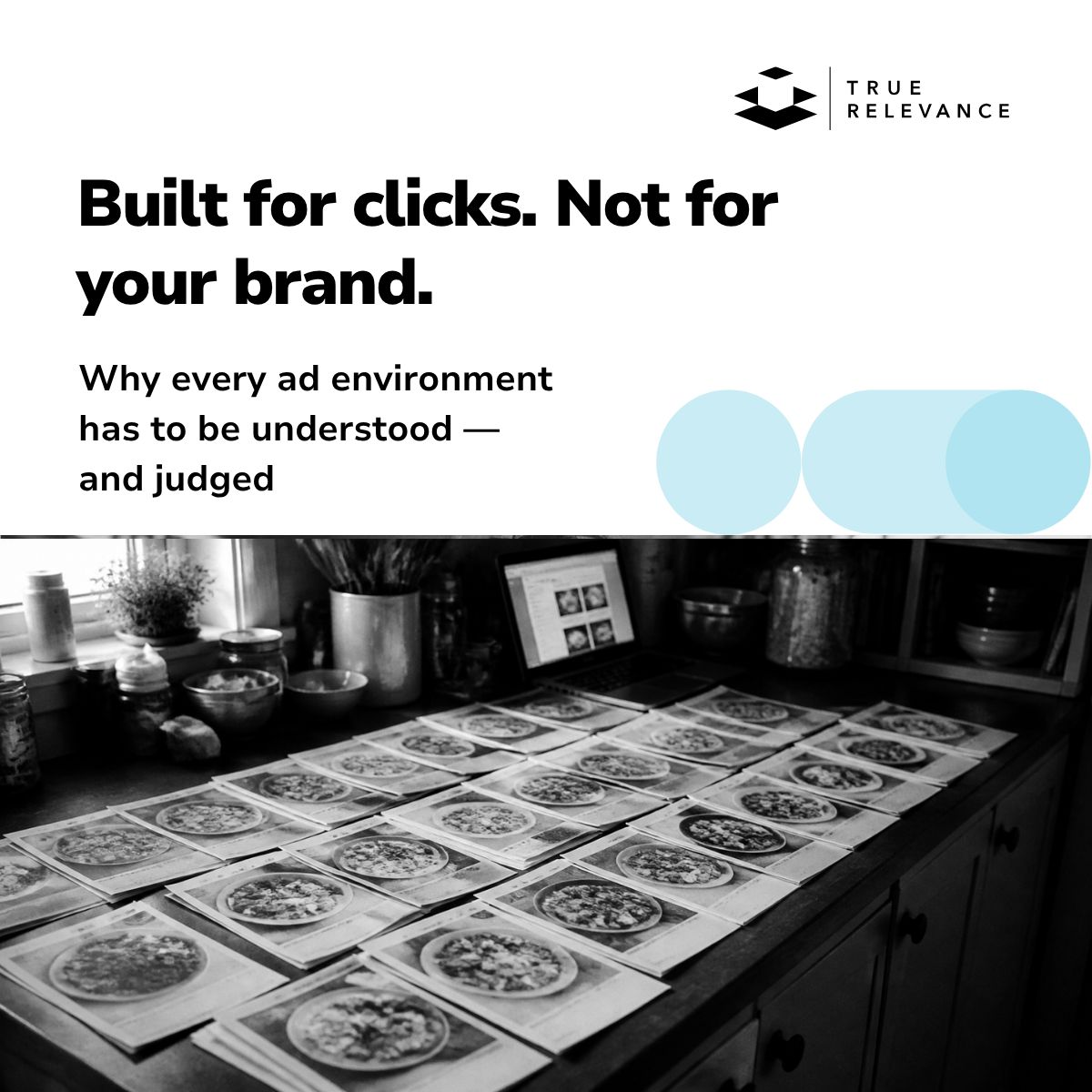
    More than 2,100 websites. Thousands of AI-generated recipes. Author photos that never belonged to a real cook.

    That is what the transparency firm DecryptAds documented last week after four months of analysis: a network of made-for-advertising sites built on AI recipe content and monetized through programmatic ad tech across several countries, including Russia and China. Ads from well-known brands appeared on these pages. Not because anyone chose them. Because the supply chain delivered them.

    Here is the part that should worry every planner. On the usual dashboards, these sites look fine. Viewability, CTR, CPM, all in range. #MadeForAdvertising inventory is engineered for exactly those metrics.

    What it cannot deliver is the thing a brand actually pays for: an environment whose credibility rubs off on the message. A fabricated author, a recycled recipe, a page nobody trusts. The image transfer from that kind of context is neutral at best. Nobody should assume it is positive.

    Which is why we keep saying that #Transparency is not a compliance topic in our business. It is the product.

    You have to know where an ad runs. At URL level, not category level.
    You have to understand what that environment does to the reader: what it signals, which motivation it speaks to, whether it has any substance at all.
    And you have to be able to judge it. Reproducibly, for every URL, before the impression is bought.

    That is the ground #PsychographicContextual stands on. We analyze the content itself, its psychological effect and the motives it addresses, and we show which URLs qualify and why. A page without real content gives the model nothing to read: no motive, no decision pattern, no substance. It does not make the segment. Not as a filter bolted on afterwards, but as a consequence of looking at content properly in the first place.

    The #OpenWeb is worth defending precisely because its best environments do what MFA never can: lend credibility to whatever sits next to them. Quality over volume, visible down to the URL.

    How do you judge an environment beyond the click today? We would like to compare notes.

    #ContextualTargeting #PrivacyFirst #ProgrammaticAdvertising #BrandSafety #AdTransparency
    View on LinkedIn ↗ (opens LinkedIn in a new tab)
  • Image for the post of 21 Oct 2026

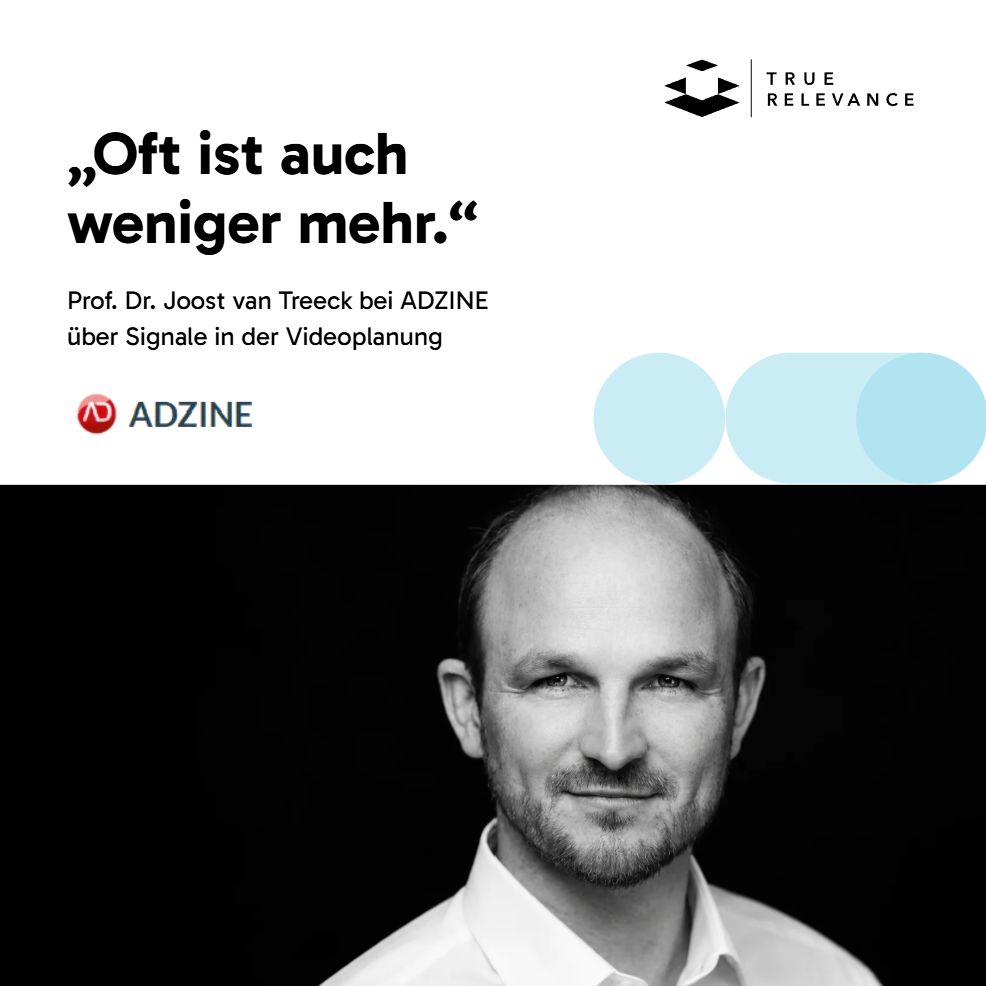
    Viel hilft viel? Nicht unbedingt.

    ADZINE - MARKETING. TECH. MEDIA. hat vor der CONNECT VIDEO fünf Stimmen aus Agenturen und Adtech gefragt, welche Signale eine Videoplanung wirklich braucht. Unser Prof. Dr. Joost van Treeck widerspricht dort der Annahme, mehr Daten bedeuteten automatisch mehr Präzision: "Jedes Signal trägt Rauschen."

    Je mehr Autonomie Agenten in Planung und Einkauf bekommen, desto mehr gilt das. Zwei Ebenen sollte man dabei trennen:
    * Durch die Kette gehören alle Signale, sauber und vollständig. Das ist Infrastruktur.
    * Und für sinnvolle Entscheidungen brauchen auch Agenten einen Filter. Was er bekommt, behandelt er als Anweisung. Wer mit LLMs arbeitet, kennt den Effekt aus dem Kontextfenster.

    Content ist dabei der eine Input, der auf jeder Plattform und unabhängig vom Consent-Status dasselbe bedeutet, auch im #OpenWeb ohne ID. Deshalb analysiert unsere AI-Engine auch die psychologische Wirkung der Inhaltsebene. #PsychographicContextual
    Den ganzen Beitrag von Anton Priebe gibt es bei ADZINE, Link im ersten Kommentar (dort auch gerne Feedback hinterlassen).

    #ContextualTargeting #ProgrammaticAdvertising #PrivacyFirst #Marketingeffektivität

    View on LinkedIn ↗ (opens LinkedIn in a new tab)
  • Image for the post of 21 Oct 2026

    Bei uns gibt es neue freie Plätze...

    ...vielleicht auch für dich🫵

    Senior Sales Manager (m/w/d) gesucht – Hamburg / remote (Deutschland), ab sofort.

    Gesucht ist eine Vertriebspersönlichkeit mit belastbarem Netzwerk in der deutschen Media-Agentur-Landschaft, die LLM-gesteuertes psychografisches Contextual Targeting mit neuen Kunden vom Pilot zum laufenden Geschäft entwickelt. Hands-on-Mentalität & Eigenverantwortung zeichnen dich aus? Programmatic, DSP/SSP, Deal-IDs, PMP sind für dich keine Fremdworte und der Erfolg deiner Kunden steht für dich an erster Stelle?

    Dann findest du hier alles Weitere zu Rolle, Profil und Bewerbung:
    https://lnkd.in/gkFfAKam

    Wer jemanden kennt, auf den das passt: gerne weiterleiten 🙏

    #ContextualTargeting #PsychographicContextual #ProgrammaticAdvertising #Karriere #TrueRelevance #AIinnovation

    View on LinkedIn ↗ (opens LinkedIn in a new tab)
  • Image for the post of 19 Oct 2026

    Kampagnen steuern, Kunden betreuen und verstehen, wie KI-Zielgruppen ohne Cookies entstehen: Dafür suchen wir in Hamburg Verstärkung.
    True Relevance sucht eine Werkstudent:in oder Praktikant:in für Campaign & Customer Success.
    Wir bauen mit #PsychographicContextual Zielgruppen, die ohne Cookies, IDs und Logins funktionieren. Agenturen, Vermarkter und Werbetreibende spielen damit Kampagnen dort aus, wo sie inhaltlich passen. Wir sind ein kleines Team, die Wege sind kurz, und du bekommst ab Woche eins echte Verantwortung.
    Das machst du bei uns:
    - laufende Kampagnen/Segmente betreuen, Performance beobachten und optimieren
    - Ansprechpartner:in für Agenturen und Partner sein und Anfragen früh klären
    - das Servicegeschäft und strategische Initiativen mitsteuern
    - komplexe Ideen so aufbereiten, dass sie bei Marketing, Vertrieb und Geschäftsführung hängen bleiben
    - nachvollziehen, wie KI-Segmente entstehen, und Prozesse verbessern

    Das wünschen wir uns:
    - ein laufendes Studium, zum Beispiel Marketing, BWL, Medien, Kommunikation, Psychologie, Sozialwissenschaften oder Wirtschaftsinformatik. Ein Abschluss ist nicht nötig, du darfst mittendrin stecken.
    - Neugier, Sorgfalt und Freude am Kundenkontakt
    - Sicherheit in Office-Tools und ein Gefühl für Zahlen

    Adtech-Vorkenntnisse brauchst du nicht. Wichtiger ist, wie du denkst und arbeitest.
    Der Rahmen: Hamburg, hybrid oder komplett remote. Die Zeiten richten sich nach Studium und Prüfungen, Umfang und Dauer besprechen wir gemeinsam (Praktikum max. drei Monate). Start ab sofort.
    Du willst dabei sein, wenn #ContextualTargeting im #OpenWeb und #PrivacyFirst den nächsten Schritt macht? Schick uns deinen Lebenslauf und ein paar Sätze zu deiner Motivation an hello [at] true-relevance.com. Fragen vorab beantwortet Till Thelosen gern.
    #Werkstudent #Hamburg #Jobs

    View on LinkedIn ↗ (opens LinkedIn in a new tab)
  • Image for the post of 15 Sep 2026

    „Everything I always wanted to know about AdTech – but nobody could explain."

    Genau darum geht es am ersten DMEXCO-Morgen bei uns am Stand. Kein Pitch, keine Slides – Kaffee, Croissants und drei Gastgeber, die Fragen beantworten, statt sie zu umschiffen.

    Was steckt hinter Cookieless wirklich? Wo endet Attribution? Was kann KI im Targeting – und was eben nicht? Alles, was du auf der Messe zwischen zwei Terminen nie zu Ende diskutiert bekommst, hier in Ruhe.
    Am Mikro (bzw. an der Espressomaschine):
    * Prof. Dr. Mark Elsner – Professor für Digitales Marketing
    * Prof. Dr. Joost van Treeck – CPO & Founder True Relevance, Professor für Werbe- und Konsumentenpsychologie
    * Jörg Vogelsang – CGO True Relevance, Vorsitz Programmatic bei German Federal Association of the Digital Economy (BVDW e.V.) , Co-Chair IAB Europe AMC

    Espresso-Talk & Opening Breakfast
    > Mittwoch, 23. September, 9:30 Uhr
    > Halle 07.1 | Stand F028

    Offen für alle: Journalist:innen, Marketer, Agenturen, Publisher – und alle, die einfach mit einem guten Kaffee in den Tag starten wollen. Die Plätze sind begrenzt, das Ticket ist kostenlos – Link im ersten Kommentar.

    Welche AdTech-Frage konnte dir bisher niemand beantworten? Schreib sie in die Kommentare – wir nehmen sie mit an den Stand.

    #DMEXCO2026 #OpenWeb #ContextualTargeting #PsychographicContextual #ProgrammaticAdvertising #TrueRelevance

    View on LinkedIn ↗ (opens LinkedIn in a new tab)
  • Image for the post of 2 Sep 2026

    The hunt for the next ID misses the point.

    For a decade, targeting has been rebuilt around the same question: how do we keep identifying people once the old identifiers fade? New IDs, new graphs, new workarounds. But identity was never what made advertising work. An ID tells you who someone probably is. It says nothing about what moves them in the moment that matters.

    Psychology answers that question - and it scales.

    Psychographic contextual targeting reads the content people actively choose, not the people themselves. Every article activates a recognizable psychological pattern:

    Motives: status, achievement, affiliation (McClelland)
    Decision levels: emotional, rational, habitual (Triandis)

    Nine patterns that explain why content resonates - measured on the page, not the person. No cookies, no IDs, no consent dependency. And because the signal lives in the content, the majority of open-web traffic that carries no ID at all becomes precisely addressable again - as premium reach, not remnant.

    That is the actual next step in targeting: from identifying people to understanding motives. Not the next ID - the next depth of relevance. #PsychographicContextual #ContextualTargeting

    Where does your targeting toolbox still depend on knowing who - instead of understanding why? We'd like to hear your view.
    #OpenWeb #PrivacyFirst #ProgrammaticAdvertising

    View on LinkedIn ↗ (opens LinkedIn in a new tab)
  • Image for the post of 24 Aug 2026

    Ad requests on the open web fell by up to 41% in Q2. Year over year.

    That's Ozone's latest data, reported by Digiday: US ad requests down 32–37%, UK down 39–41%. Programmatic spend on the open web dropped 30.6% in the first half. Not because people stopped reading, but because zero-click search and AI answers keep more of the journey on the platforms.
    The detail worth sitting with: while volume fell, eCPMs rose - roughly +30% in the UK, +7% in the US. Scarcity is repricing the open web in real time.

    For planners, this changes the math. When impressions were abundant, loose targeting was affordable; volume averaged out the waste. When supply contracts by a third, every contact has to carry more of the outcome. Relevance per contact stops being a quality metric and becomes the economics of the plan.

    This is exactly where #PsychographicContextual targeting earns its place in the toolbox: it reads what a piece of content means to the person engaging with it — which motives it speaks to, on which decision level — and makes every impression addressable on relevance. Including the 50%+ of #OpenWeb traffic that carries no ID at all. No cookies, no logins, no consent dependency.

    A scarcer open web isn't a weaker open web. Priced by relevance, it may be making the strongest case it has made in years.

    How is your planning adapting to a smaller, more expensive open web? We'd genuinely like to compare notes.

    #ContextualTargeting #PrivacyFirst #ProgrammaticAdvertising

    View on LinkedIn ↗ (opens LinkedIn in a new tab)
  • Image for the post of 18 Aug 2026

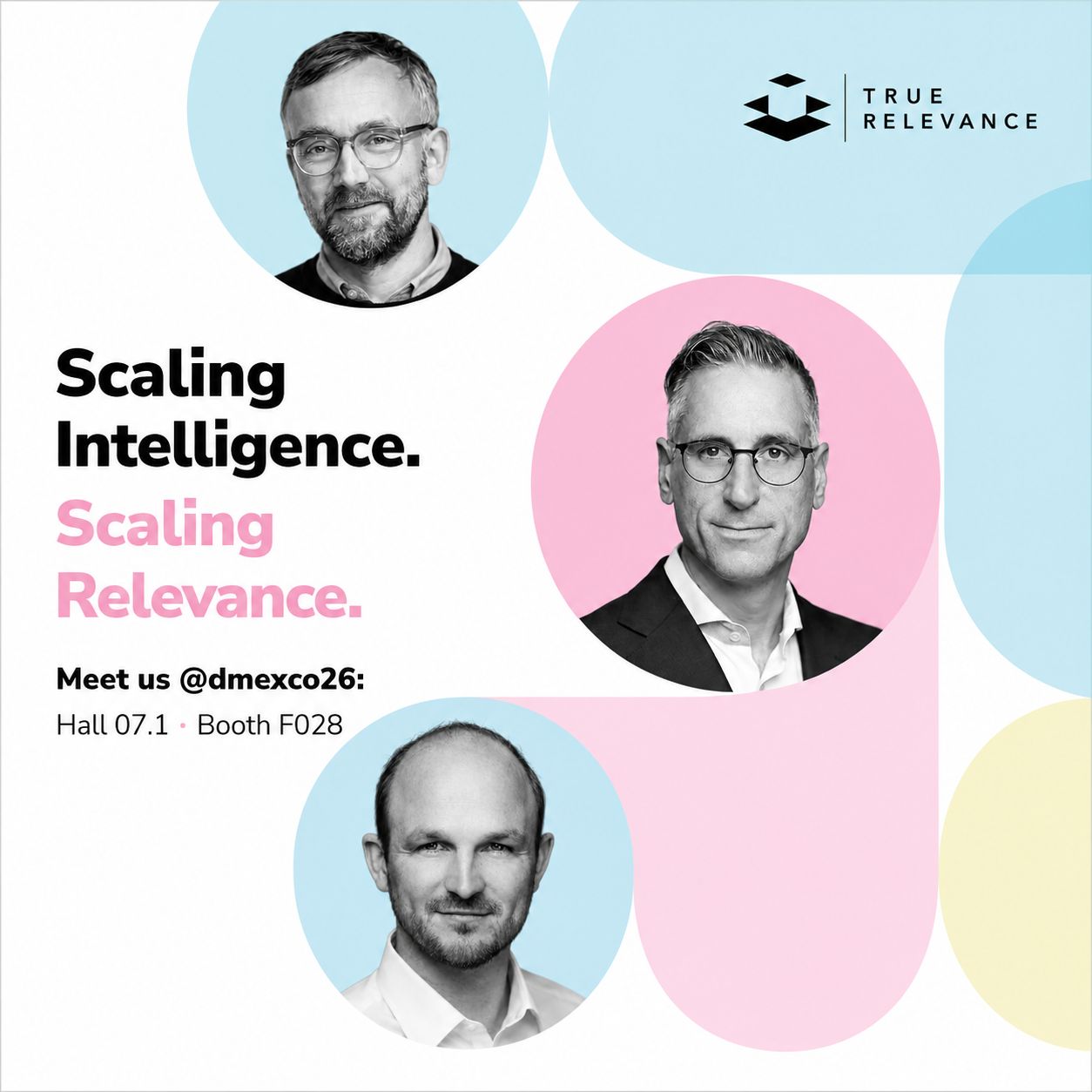
    „Scaling Intelligence" lautet das Motto der DMEXCO 2026 - und Intelligenz skaliert nur so gut wie die Signale, mit denen sie arbeitet. Genau diese Signal-Schicht bauen wir: #PsychographicContextual, Relevanz direkt aus dem Inhalt gelesen, ohne Cookies, ohne IDs.

    Trefft Mark Elsner, Prof. Dr. Joost van Treeck und Jörg Vogelsang an unserem Stand in Köln (23.–24.09.) - mit dem Link unten Termin sichern.
    ----
    "Scaling Intelligence" is the DMEXCO 2026 motto - and intelligence only scales as well as the signals it runs on. That signal layer is what we build: #PsychographicContextual, relevance read from content itself, no cookies, no IDs.

    Meet Mark Elsner, Prof. Dr. Joost van Treeck and Jörg Vogelsang at our booth in Cologne (Sept 23–24) -book your slot here:

    https://lnkd.in/eA2sdgtg
    #DMEXCO #ContextualTargeting #OpenWeb

    View on LinkedIn ↗ (opens LinkedIn in a new tab)
  • Image for the post of 7 Aug 2026

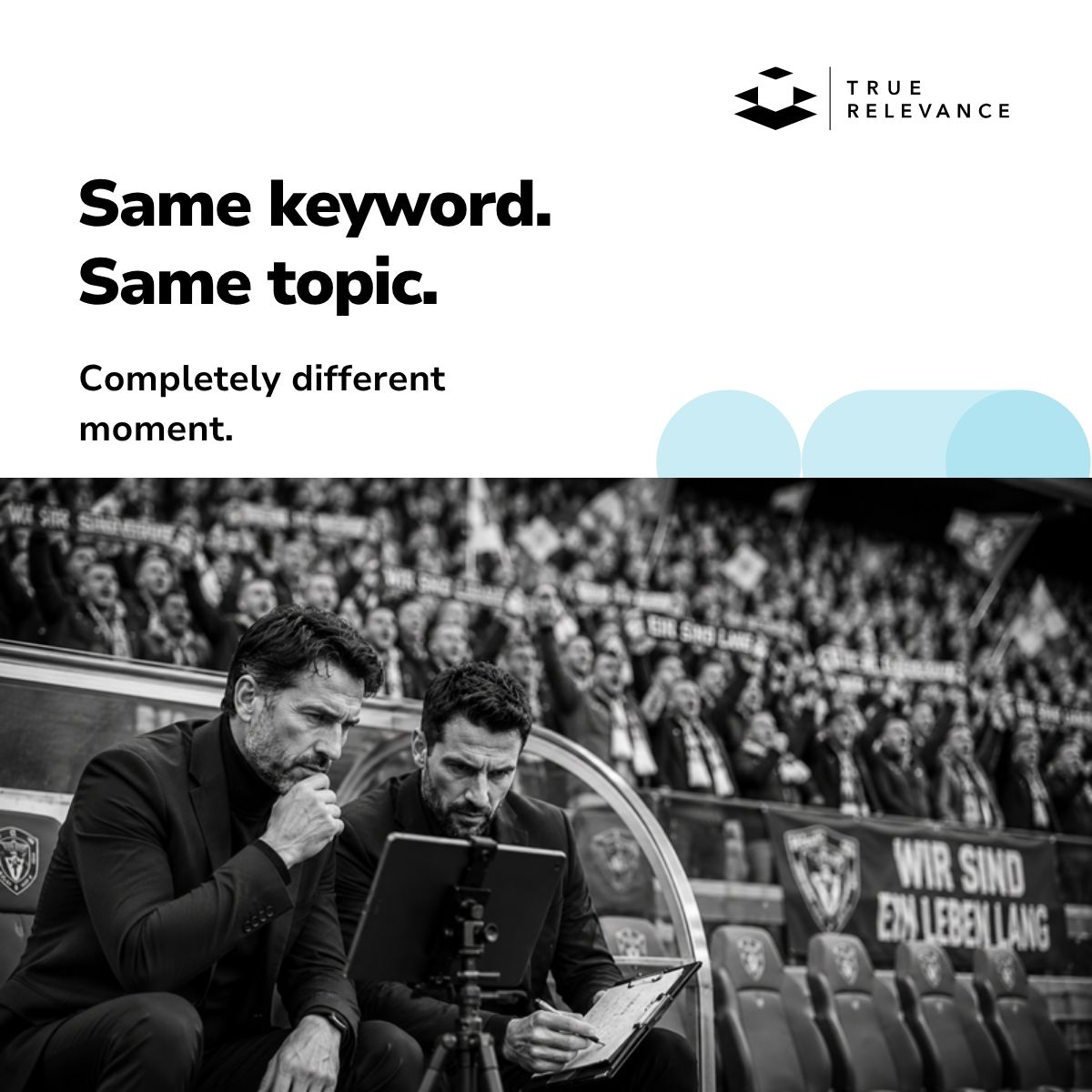
    Same keyword. Same topic. Completely different moment.

    Take football. A fan reading a tactical deep-dive with line-ups and xG charts is in analysis mode - rational, focused on performance. The same fan, an hour later, reading a piece about away days and fan culture is in belonging mode - emotional, connected.

    Classic environment targeting sees one context here: "football". Psychographic Contextual reads what the content does to the reader - which motive it speaks to (status, achievement, affiliation) and on which level the moment plays out (emotional, rational, habitual).

    And that changes what belongs next to the content: the performance message next to the analysis, the community message next to the fan story. Same audience, same interest - but the ad meets the mindset, not just the topic.

    The best part: the signal sits in the content itself. No cookies, no IDs, no personal data - which is why #PsychographicContextual also works on the 50%+ of #OpenWeb traffic that stays anonymous. #PrivacyFirst by design, and a strong addition to the #ContextualTargeting you're already buying - not a replacement for your toolbox.

    Where does topic-level targeting hit its limits in your campaigns? We'd like to hear your take.

    #ProgrammaticAdvertising

    View on LinkedIn ↗ (opens LinkedIn in a new tab)
  • Image for the post of 31 Jul 2026

    Die Automatisierung wird immer besser. Warum aber raten dann so viele Kampagnen genau noch bei dem _Warum_?

    Die Wissenschaft hinter #PsychographicContextual Targeting - in 60 Sekunden erklärt:

    Drei Motive treiben menschliches Verhalten (McClelland): Leistung, Anschluss und Status.

    Drei Ebenen prägen Entscheidungen (Triandis): emotional, rational und habituell.

    Kombiniert ergeben sie 9 Muster, die beschreiben, warum ein Inhalt die Menschen bewegt, die ihn lesen.

    Das ist das ganze Modell. Entwickelt mit unserem Founder & CPO Prof. Dr. Joost van Treeck analysiert es die psychologische Wirkung von Inhalten -nicht die Menschen vor dem Bildschirm. Keine Cookies, keine IDs, keine Logins.

    Genau deshalb funktioniert es im gesamten #OpenWeb, inklusive der über 50% des Traffics, die ID-basiertes Targeting nicht sieht. Wissenschaft statt Blackbox: Jede Platzierung ist bis zur URL transparent, und die 9 Muster sind über die führenden Plattformen buchbar - als Ergänzung zur bestehenden Targeting-Toolbox.

    Neugierig geworden, welche Psychografien für eure Zielgruppen die passenden sind? Wir freuen uns auf den Austausch - die Kommentare sind offen.
    #PrivacyFirst #ProgrammaticAdvertising

    View on LinkedIn ↗ (opens LinkedIn in a new tab)
  • Image for the post of 29 Jul 2026

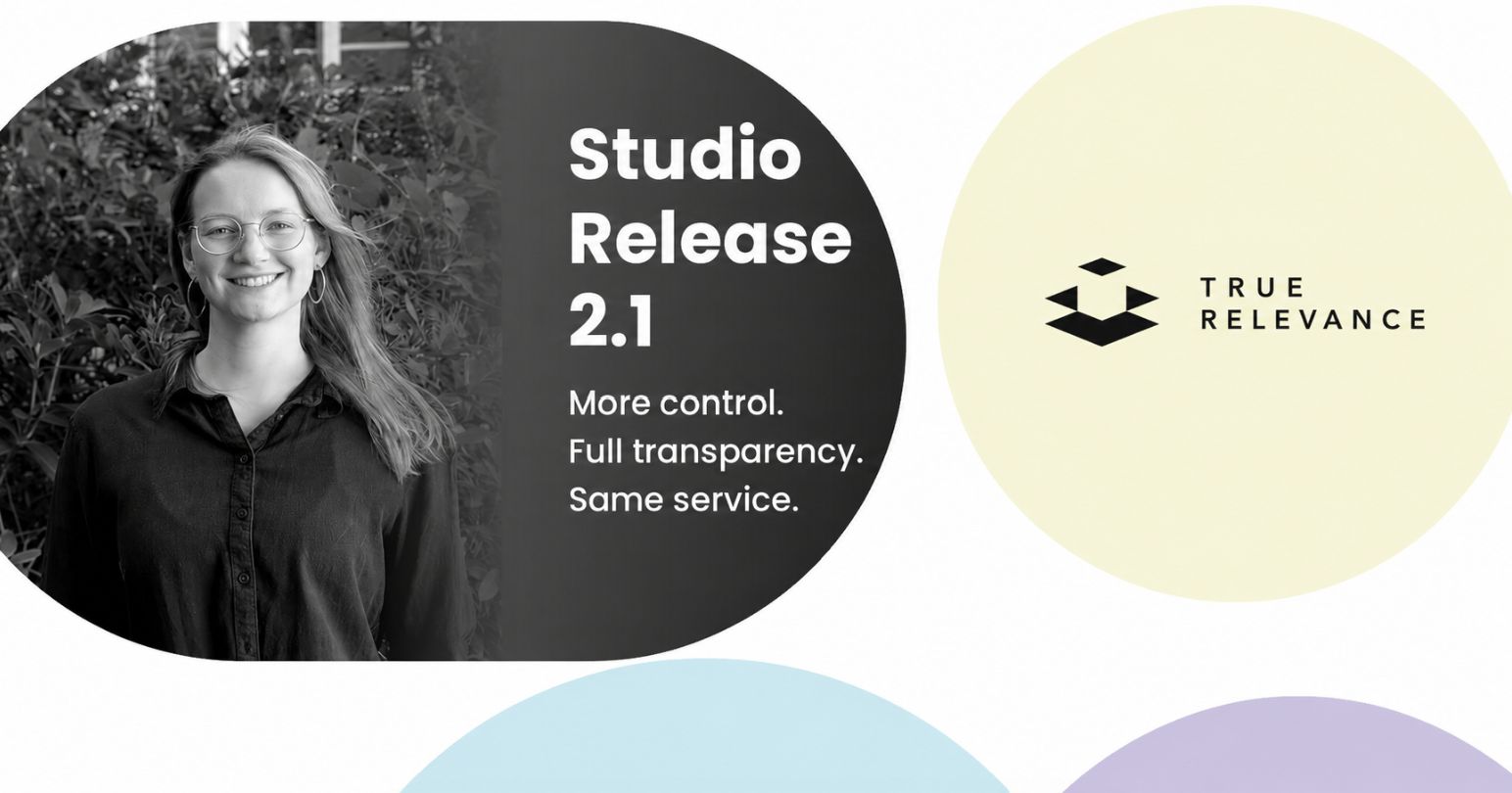
    Wie viele E-Mails braucht es, um das #PsychographicTargting einer laufenden Kampagne anzupassen? Bisher: ein paar hin und her. Ab heute: keine.

    Unser True Relevance Studio 2.1 ist live. Das Studio ist der direkte Draht zu unserem psychografischen #ContextualTargeting – hier briefen Kunden ihre Kampagnen und wir bauen daraus die passenden Segmente. Mit dem Update kommt dazu, was bisher fehlte: alles, was nach der Erstellung passiert.

    Unsere Projektmanagerin & Data Scientist Ann-Kathrin von Mickwitz hat das Release verantwortet – und bringt den Kern auf den Punkt:
    „Mir hat es Spaß gemacht herauszufinden, welche Features unseren Kunden beim Managen eines Segments nach der Erstellung am meisten helfen. Bisher lief das alles per E-Mail. Mit dem Update lassen sich die häufigsten Anliegen direkt im Studio erledigen."

    Konkret heißt das:
    ▪️ Neuer Management-Bereich: alle Kampagnen des Unternehmens auf einem Screen, Status-Icons zeigen, wo jede steht. Flight-Daten, Impressions, Brand? Direkt editierbar.
    ▪️ Transparenz auf Knopfdruck: Sample-Listen der zugewiesenen URLs jederzeit als CSV laden, Segment-Input einsehen und anpassen, Segmente boosten. Keine Blackbox, kein Warten.
    ▪️ Kürzere Wege: Rückfragen aus unserem Monitoring landen als Ticket direkt im Studio, die Antwort aktualisiert die Kampagne automatisch. Und in der Creation entwirft der neue AI-Support die Segment-Beschreibung aus Brand und Landingpage.

    Und ganz wichtig: Unsere Kunden können jetzt deutlich mehr selbst erledigen – müssen sie aber nicht! Wir bleiben für jede Anfrage erreichbar und managen Kampagnen und Segmente auf Wunsch weiterhin aktiv.

    🙏 Danke, Ann-Kathrin, für dieses Release: von der ersten Skizze bis zum Rollout durchdacht, nah an dem, was Kunden im Alltag wirklich brauchen. Starke Arbeit! 💪

    Ihr wollt das neue Studio sehen? Hier kommentieren oder an hello [at] true-relevance.com schreiben – wir führen euch gerne durch.

    #PsychographicContextual #OpenWeb #PrivacyFirst #ProgrammaticAdvertising

    View on LinkedIn ↗ (opens LinkedIn in a new tab)
  • Image for the post of 28 Jul 2026

    Automation keeps getting smarter. So why do so many campaigns still guess at the why?

    Here is the science behind #PsychographicContextual targeting — in 60 seconds:

    Three motives drive human behavior (McClelland): achievement, affiliation, and status.

    Three modes shape how decisions are made (Triandis): emotional, rational, and habitual.

    Combined, they form 9 patterns that describe why a piece of content moves the people reading it.

    That's the model. Developed with our Founder & CPO Prof. Dr. Joost van Treeck, it analyzes the psychological effect of content itself — not the people behind the screen. No cookies, no IDs, no logins. Which is exactly why it works across the entire #OpenWeb, including the 50 %+ of traffic that ID-based targeting can't see.

    Science instead of black box: every placement is transparent down to the URL, and the 9 patterns are bookable through the leading platforms as part of your existing #ContextualTargeting toolbox.

    Which of the 9 patterns does your audience respond to? We're happy to compare notes — the comments are open.

    #PrivacyFirst #ProgrammaticAdvertising

    View on LinkedIn ↗ (opens LinkedIn in a new tab)

We publish these posts on LinkedIn as well. “View on LinkedIn” opens the original post there.